
Water Storage Containers: What to Buy for Your Home
Updated November 4, 2026: Product options, buying comparisons and water-storage safety guidance reviewed.
When we went through our family’s emergency supplies, we realized we had less water stored than we needed. Choosing containers was part of fixing that. We wanted water we could keep at home, but we also needed some we could take with us.
We use a mix of bottled water, drums, smaller jugs, stackable containers and collapsible containers. You don’t have to buy all of those. Start with the amount you need, the space you have and what you can comfortably lift.
Quick Answer: Which water containers should you buy?
For a first supply, start with sealed bottled water or food-grade drinking-water jugs you can lift when full. Choose smaller stackable containers when space is tight. Add a 55-gallon barrel when you have a permanent spot and a way to pump water out. A collapsible jug or bathtub bladder can help, but an empty container gives you no water during a sudden outage.
This article contains affiliate links. As an Amazon Associate, we earn from qualifying purchases. You pay no extra through these links.
Choose for the way you will use the water
| Your situation | What to look for | What could make it a poor fit |
|---|---|---|
| Starting with a small budget | Sealed bottled water, then manageable refillable drinking-water jugs | Buying a large empty tank before you have a usable supply |
| Apartment or small storage area | Smaller rigid containers that fit your measured space; approved filled stacking if needed | Heavy stacks you cannot safely take apart or shelves without enough support |
| Camping or carrying water to the kitchen | A jug with a comfortable handle and usable pour spout | A full jug that is too heavy for the person using it |
| A larger stay-at-home reserve | A drinking-water barrel with a hand pump or suitable outlet | No safe permanent location, drainage plan or power-free way to get water out |
| Advance warning of a storm | A bathtub bladder as extra storage, filled while tap water is still safe | Relying on it for an outage that happens without warning |
Our smaller containers let us spread water through closets and our storage room rather than finding one large open spot. If you use a garage, check the temperature first. See our guide to protecting stored water from freezing.
How much water will the containers hold, and weigh?
For a starting supply, plan one gallon per person each day for at least three days. Work toward two weeks if possible, with extra for pets, heat and special needs. See the CDC’s emergency water guidance and our water storage calculator.
Four people need 12 gallons for three days at that starting amount, or 56 gallons for two weeks. Two 6-gallon jugs cover the first goal. One 55-gallon barrel falls a gallon short of the second, before any extra needs.
| Container capacity | Water alone | Buying implication |
|---|---|---|
| 1 gallon | 8 lb | A useful smaller size if larger jugs are difficult to lift |
| 3.5 gallons | 29 lb | Still a substantial lift, even with a handle |
| 5 gallons | 42 lb | Plan how to carry and pour it |
| 6 gallons | 50 lb | The filled Igloo below weighs about 53 lb including the jug |
| 55 gallons | 459 lb | Fill in its permanent location |
| 275 gallons | 2,294 lb | Needs a planned support and dispensing setup |
| 550 gallons | 4,587 lb | A large installation, not a portable household jug |
Calculated at about 8.34 pounds per US gallon, rounded to the nearest pound. These are handling estimates, not floor or shelf load ratings. Leave any fill space the manufacturer requires.
Water storage containers to consider
These options serve different jobs. The comparisons use published product details and our family’s documented storage habits. We have not run a hands-on comparison of every model, so these are buying options rather than tested winners. Check the exact size, seller, package contents and return policy before ordering.
| Option | Linked size or pack | Main tradeoff |
|---|---|---|
| Igloo jug | One 6-gallon jug | Convenient spout; about 53 lb full |
| WaterBrick | Ten nominal 3.5-gallon units | Smaller units; check actual fill volume and spigot |
| Samson Stackers | Six 5-gallon units; 30 gal total | One shared spigot; verify filled stacking instructions |
| WaterStorageCube | Four 5.3-gallon units; 21.2 gal nominal | Folds empty; needs protection from punctures |
| Augason barrel kit | One 55-gallon barrel kit | Large reserve; needs a permanent location and pump |
| waterBOB | One bladder; up to 100 gal | Single-use; fill while safe tap water is still available |
Igloo 6-Gallon Water Container: an upright jug with a pour spout

Consider it if: you want a rigid jug for carrying and pouring water, and can manage the filled weight. Igloo lists top and side handles, a stowable spout and a vent. It is not insulated.
Skip it if: lifting about 53 pounds is too much. A smaller drinking-water jug is a better choice than a large one nobody can use. This model measures about 13.8 × 7.3 × 20.6 inches, so check your storage height.
Check before buying: this is one 6-gallon jug. Don’t assume it is approved for filled stacking. Igloo’s model 42154 details list its size, features and one-year limited warranty.
Check the Igloo 6-gallon jug on AmazonWaterBrick 3.5-Gallon Containers: smaller units for tight spaces
Consider them if: you want to divide your water into smaller units instead of carrying a 5- or 6-gallon jug. Their low shape gives you more placement options, provided you measure first.
Skip them if: you want to draw water without handling caps or arranging a dispensing setup. Check whether the pack includes a compatible spigot. Several small containers also mean several seals to inspect.
Check before buying: the linked listing is a 10-pack of nominal 3.5-gallon containers. The WaterBrick manual notes some capacity loss from the shape, so don’t plan a supply with no margin. Follow its cross-stacking directions and stay within your own safe lifting height. Even this smaller unit holds about 29 pounds of water before the container’s weight.
Check the WaterBrick 3.5-gallon 10-pack on AmazonAPI Kirk 5-Gallon Samson Stackers: a multi-container home reserve

Consider them if: you want rigid containers that divide a larger reserve into separate 5-gallon units. That makes it possible to use one while leaving the others closed.
Skip them if: a roughly 42-pound water load per container is too much, or you cannot safely reach the upper containers. A stackable shape does not tell you how many full units you may stack.
Check before buying: the linked retailer listing describes six 5-gallon containers, 30 gallons total, with one shared spigot and one wrench. Confirm the current package. Ask API Kirk for the exact model’s drinking-water suitability and filled stacking limit if the supplied instructions do not state them. UN transport certification alone does not answer those questions.
Review the API Kirk 5-gallon six-pack on AmazonWaterStorageCube Collapsible Containers: useful for camping and spare capacity

We use collapsible containers for camping and travel. We also keep them on shelves and in closets alongside our other water containers. I like that they take up less room when empty.
Consider them if: you need a container that folds away between trips. Skip them as your only reserve if you plan to leave them empty until an emergency. Don’t stack full soft containers or place them against sharp items.
Check before buying: our existing link currently selects a 5.3-gallon four-pack, or 21.2 gallons of nominal capacity. Other sizes may appear on the same page. Check the selection rather than relying on the photo. Follow the manufacturer’s care instructions, including drying before empty storage.
Check WaterStorageCube sizes and pack options on AmazonAugason Farms 55-Gallon Barrel Kit: a stationary home supply

We like the hand pump and accessories with this kind of kit because they make it easier to get water out. A barrel is much less useful if you cannot reach the water inside it.
Consider it if: you have a permanent location and want a larger reserve without managing lots of small jugs. Skip it if: your water needs to travel with you, or you cannot fill, empty and clean the barrel in place.
Check before buying: compare the barrel, bung wrench, hand pump and any treatment product included. The manufacturer’s current offerings and retailer packages can differ. Confirm delivery or pickup terms. Follow the treatment product’s actual label; a kit’s marketing claim does not replace a maintenance plan.
The water alone weighs about 459 pounds. Check support and drainage before filling. Our large-volume water storage guide covers the setup decisions.
Check the Augason Farms 55-gallon kit on AmazonwaterBOB Bathtub Bladder: extra water when you have warning

Consider it if: a storm gives you time to fill it while your tap water is still safe. The maker describes waterBOB as a single-use bladder with a siphon pump. It holds up to 100 gallons, depending on the bathtub.
Skip it as your main supply: you may lose water without warning, and you lose use of that bathtub while it is filled. It is not a container to carry out of the house.
Check before buying: make sure it fits your tub and faucet setup, and account for the load on the tub and its support. Follow the current filling, use and disposal instructions. Keep prefilled drinking water as well.
Check the waterBOB bathtub bladder on AmazonShould you buy a 275- or 550-gallon tank?
For most people starting out, I would get a usable smaller supply in place first. Large tanks make sense when you have already planned the location, support, filling, cleaning and water outlet. They are much more than a larger version of a camping jug.
Global Industrial 275-gallon IBC: verify drinking-water approval first

The linked Global Industrial listing is a 275-gallon industrial IBC. We could not confirm drinking-water approval for this exact listing, so it is not a ready recommendation for drinking-water storage. Ask the manufacturer for written confirmation covering the tank, valve and seals before purchasing for that use.
A UN rating describes transport requirements, not whether a tank is suitable for your drinking water. Never buy a used chemical tote for drinking water. Also budget for delivery, the correct outlet adapter and a suitable support surface. A full tank holds more than a ton of water.
Review the Global Industrial IBC specifications on AmazonRomoTech 550-gallon tank: a larger installation to plan with the maker

The original RomoTech link leads to a 550-gallon legged tank, model 2387. Amazon showed it as unavailable when checked November 4, 2026. It is not an in-stock shopping pick.
Before ordering any large tank, ask RomoTech to confirm drinking-water suitability for the exact model, required support, fittings and installation limits. Don’t bury a tank unless the manufacturer specifically designed it for burial. See Norwesco’s guidance on above-ground tank limits for why tank type matters.
Check availability of the original RomoTech tank on AmazonSix checks before spending money
Use this checklist while comparing listings. Your checks stay on this page only.
For example, a $90 setup that holds 15 usable gallons costs $6 per gallon of storage. A $70 setup that needs $35 in parts and holds 10 gallons costs $10.50 per gallon. These are made-up comparison amounts, not current product prices.
Can you start without buying special containers?
Yes. Sealed store-bought water can get your first supply in place while you save for refillable containers. We keep bottled water as part of our own mix. You don’t need to wait until you can afford a barrel.
We have also reused beverage bottles, but reuse takes care. Choose containers with a known history that meet safe water-storage guidance. Don’t use anything that held bleach, pesticides or fuel. Glass can break, and a random household container may not seal or withstand storage well.
Choose a purpose-made stainless-steel drinking-water container if you prefer metal. Confirm the exact model and fittings; a fuel-style can or a “stainless” label does not establish suitability. We are not recommending a specific steel model here.
Once the containers arrive, make them useful
Inspect for damage, clean and sanitize as directed, fill with safe water and check for leaks before putting containers away. Label them with the fill date. For water you fill at home, use the CDC’s six-month replacement schedule. Keep it cool, out of sunlight and away from chemicals.
Our stored-water shelf-life guide explains rotation, opened containers and what to do if water seems questionable. Follow local water advisories when choosing water to fill your containers.
A filter, pool or rain barrel fills a different need
Our family keeps filters among our emergency supplies too, but a filter is not stored water. Its ability to treat water depends on the specific contaminants and the filter’s rating. A new container does not make unsafe source water safe.
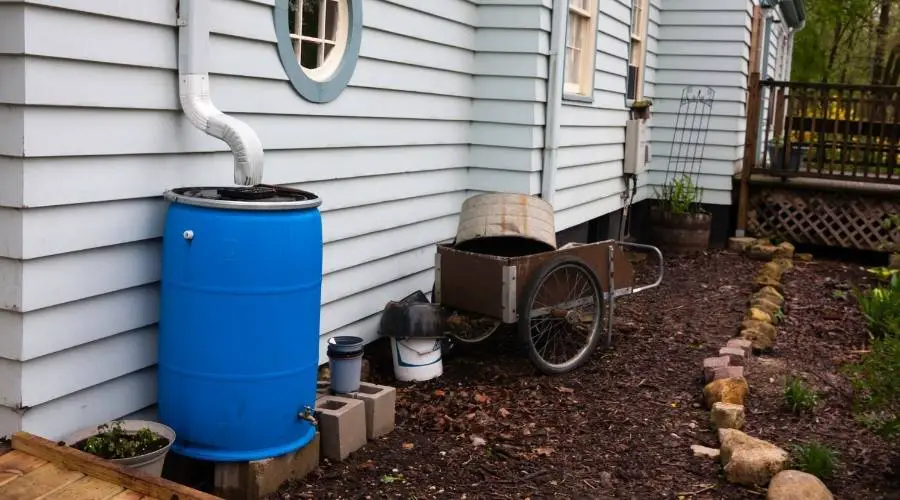
Rainwater can contain germs and chemicals, so a rain barrel is not the same as a ready drinking-water reserve. CDC also advises against drinking pool or spa water. Boiling or a basic filter cannot fix every kind of contamination.
Start with containers that fit your home and that your family can actually use. Once that first supply is ready, build from there. Visit our water preparedness articles for the next steps.